
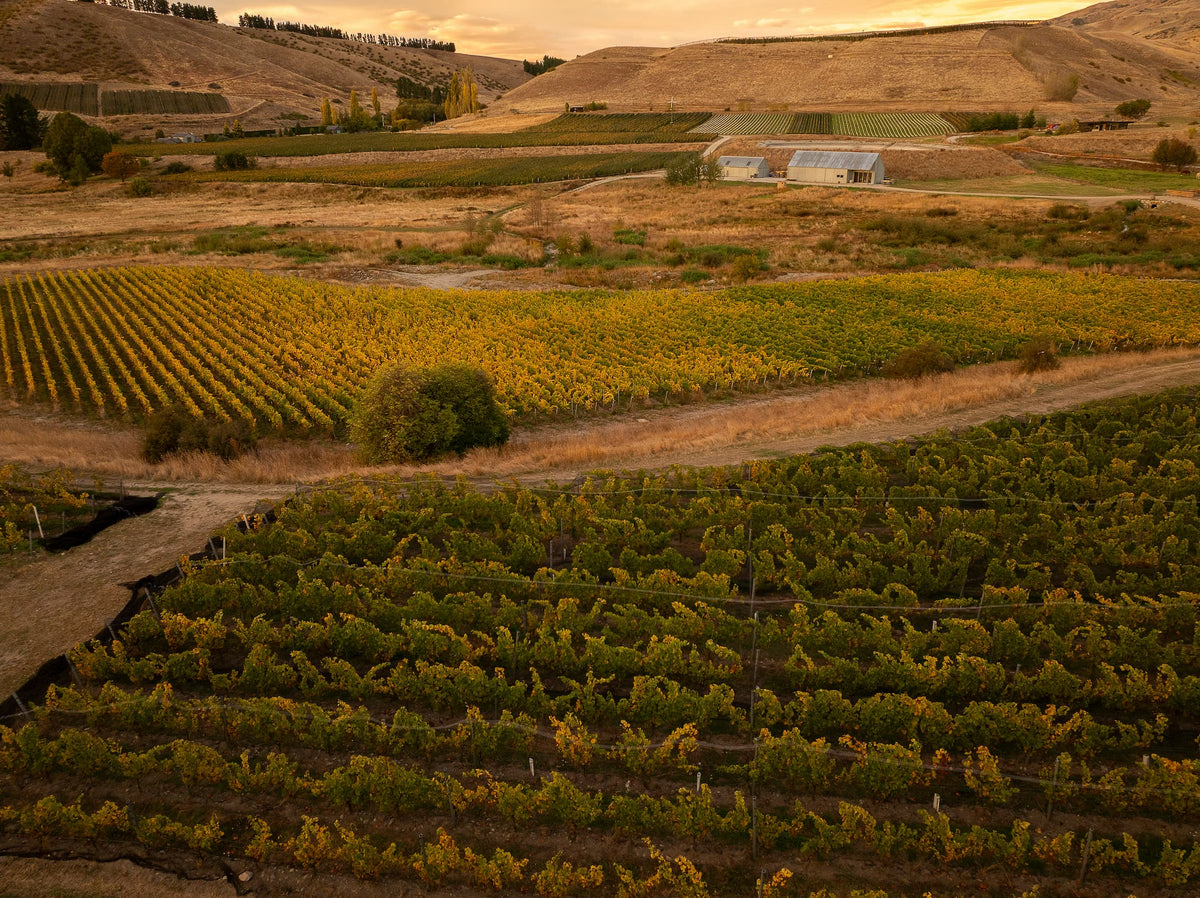
Our story breathed a new chapter in 2018 when Brian Sheth, co-owner of Aotearoa New Zealand Fine Wine Estates alongside Steve Smith MW, purchased the Lowburn Ferry vineyard in Central Otago from its founders, Roger and Jean Gibson. Blessed with some of the oldest vines in Central Otago, and where more than 150 years of sensitive human cultivation, market gardening and irrigation has created soils of rare distinction, high in natural humus and organic matter, the site had been producing exceptional Pinot Noir since 2002 – a legacy shaped in no small part by the Gibsons' own scientific grounding, Roger as a soil and plant scientist, Jean with a background in horticultural science.
There is no doubt that the heart and soul of Pyramid Valley is embedded in the two parcels each of Pinot Noir and Chardonnay planted in the original home vineyard at Waikari. However there has always been a Pyramid Valley story of elsewhere through relationships with growers throughout the country. One of the most notable was the Calvert Vineyard Pinot Noir project, with wines made from the same Bannockburn vineyard by Pyramid Valley, Felton Road and Craggy Range from 2006 to 2013. We wanted to resurrect that Central Otago connection with a vineyard we owned and could develop into one of the same calibre as Waikari.
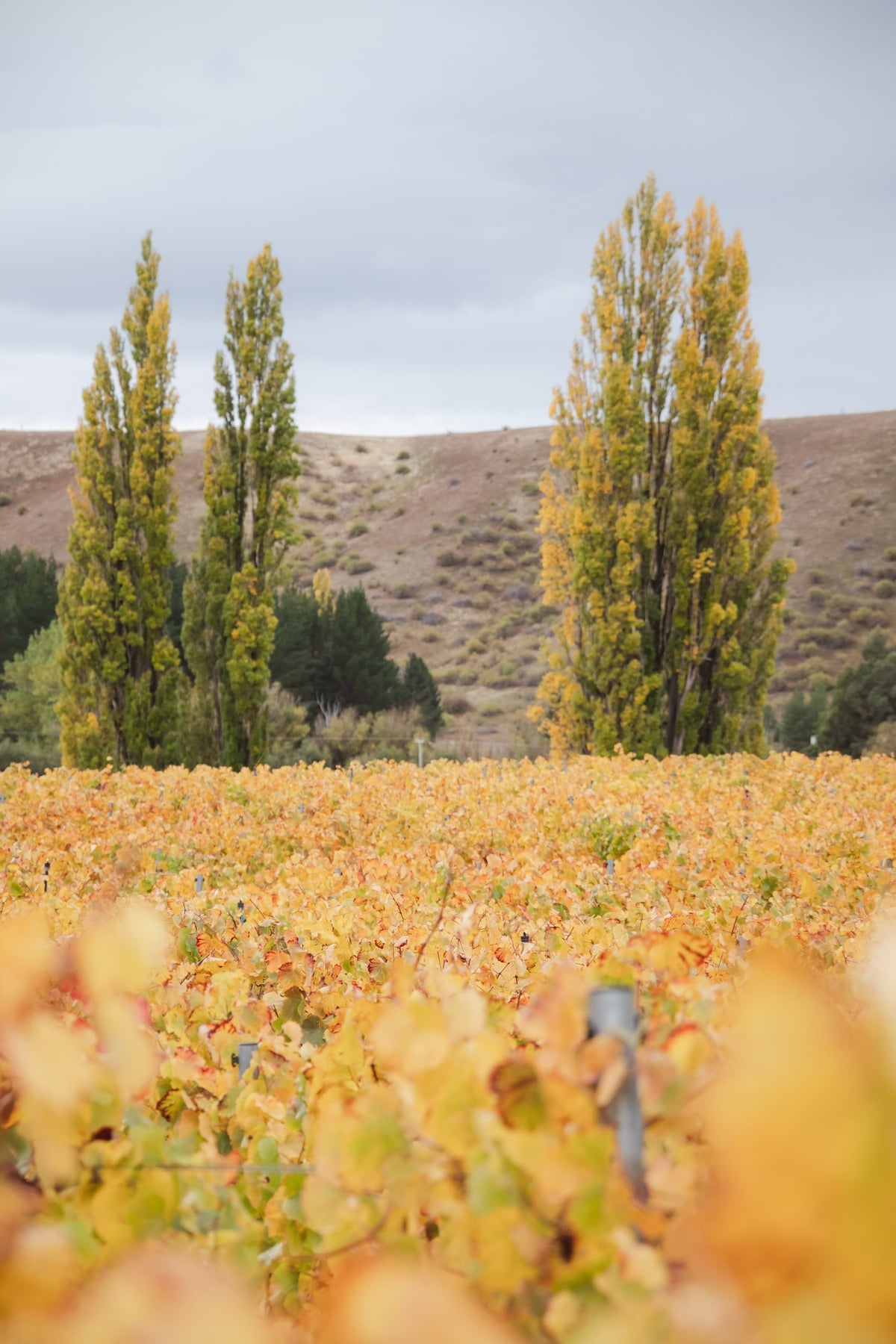
The soil though is where the magic happens. Sitting off the tops of the rocky glacial outcrops and above the sandy valley floor, millennia of wind and wash down the Low Burn – a stream running through the vineyard – has created a deep bed of loess sitting above the schist so prevalent in this region. As part of its natural evolution of schist and loess in this arid environment, clay and small particles of calcium coalesced together to form pedogenic lime, lifting the soil's pH above 7.0. While not limestone soils in the true sense of the word, they chemically have a lot of similarity.
How could we find another place with the heritage, the drama and sensitive human cultivation as Waikari?
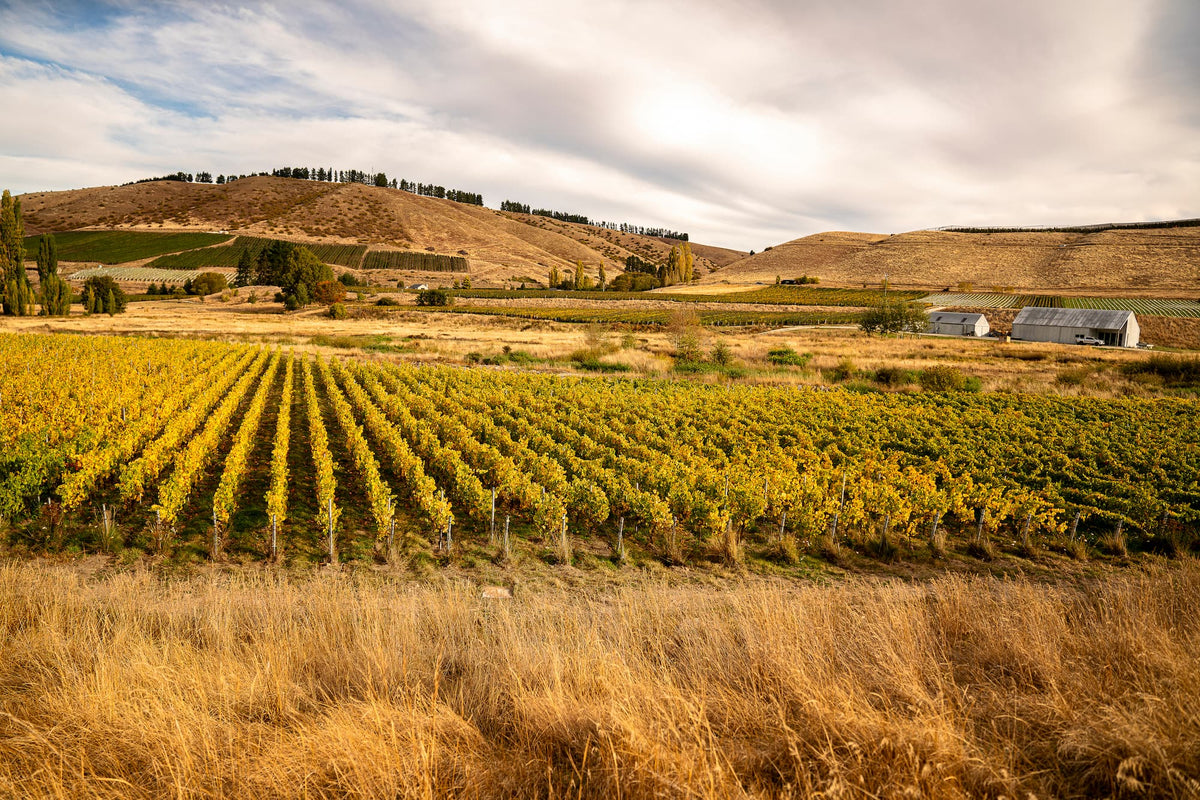
After almost three years searching, Brian and Steve secured the original Lowburn Ferry vineyard now named Low Burn. The wines of Lowburn Ferry, with their long velvety tannins and dark refined fruit spectrum, hinted at something special in this vineyard. And special it is – a location within the Central Otago region that is quite unique, in its own sheltered valley and a series of elevated terraces gently sloping to the north.
The vineyard was first planted in 2000 with 2.8ha of mixed clone vines on own roots and rootstock growing on the north facing slope known as the Home Block. This was followed by a later planting of Abel clone in 2007 on a lower terrace, where the soils are deeper and were the heart of the market gardening operations of the goldminers.
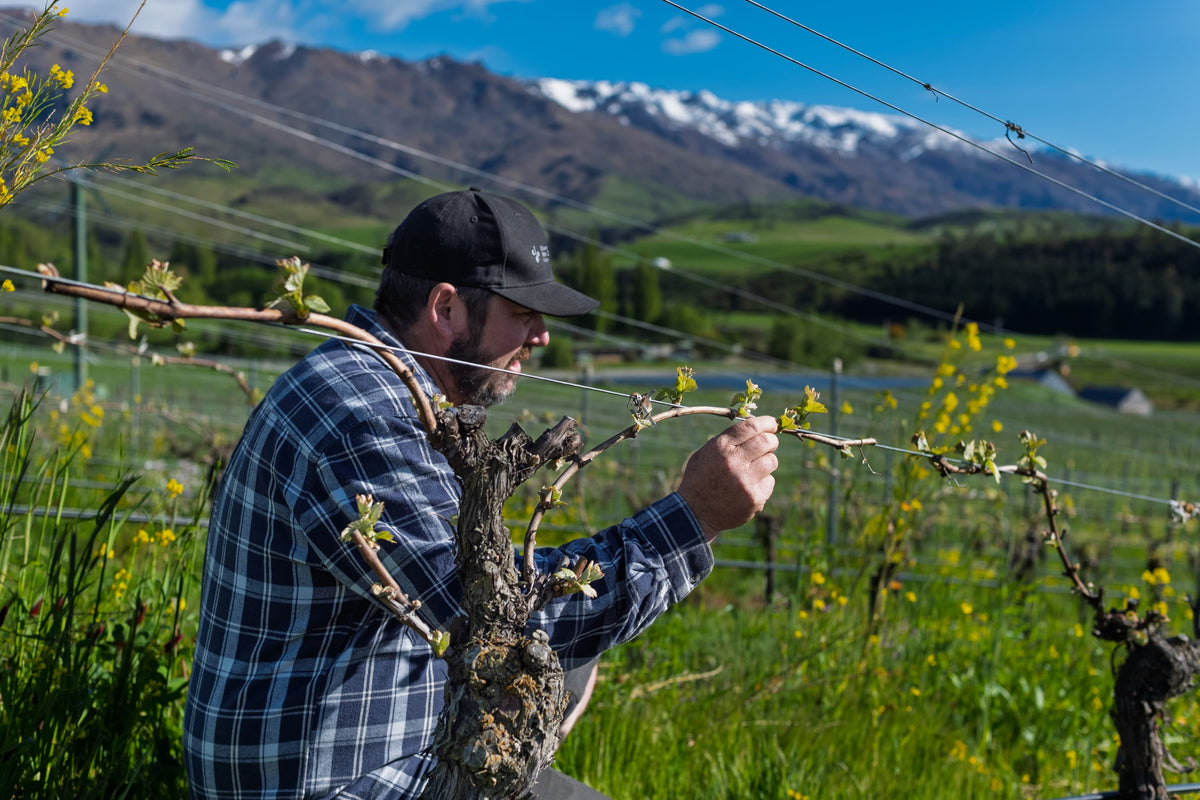
Since 2018 we have converted to organic agriculture and embraced regenerative farming across the vineyard. We have planted just over 50,000 vines in 7 high density parcels across the vineyard, including a small planting of mixed clone Chardonnay and ultra-high density mixed clone Pinot Noir on the stony Swann Road, northern side of the property that has never been farmed.
Low Burn Estate is home to three Pyramid Valley wines, two Pinot Noir and one Chardonnay. The first, an estate wine made in 2021, is an assemblage from the different parcels across the vineyard. The second, Snake's Tongue, is made from the deeper soils sitting just above the bed of the Low Burn – named for the wild blue borage, its colloquial name, that grows endemic throughout the vineyard, and the first of the Botanicals Collection wines to come from outside the Waikari home vineyard. The reverence we have for these wines speaks volumes of our confidence in these Snake's Tongue parcels at Low Burn to make a Pinot Noir that is truly profound. The 7,400 Chardonnay vines produce Pyramid Valley Low Burn Chardonnay from the northern parcels of the vineyard adjacent to Swann Road, first released in 2025.
Quick facts
- Rare calcium-rich loess and schist-derived soils
- Elevation 240–270m
- Planting density 3,400–9,375 vines/ha
- Total 10.2ha 62,500 vines
- Sheltered, north-facing terraces
- Organic and regenerative farming
Hand in hand with nature
In our vineyards we are developing a systematic mindset, a way of thinking, that continually challenges us to think in a connected, not isolated way. While biodynamic and organic principles are followed in both our Waikari and Low Burn vineyards, we have developed our own version of regenerative viticulture.
Inspired by practices associated with biodynamics, organics and regenerative agriculture, our ‘Regenics™’ winegrowing techniques are primarily focused on healthy soils, a biologically diverse ecosystem and a decision-making system that includes the best of science and natural wisdom. Growing fine wine hand-in-hand with nature.

Discover more
Our Place
Pyramid Valley began with a simple idea: that fine wine starts with a deep understanding of place. Follow our journey.
Read more
Winegrowing & Vinification
From the soil beneath our vines to the wine in your glass, see how our philosophy shapes every Pyramid Valley wine.
Read more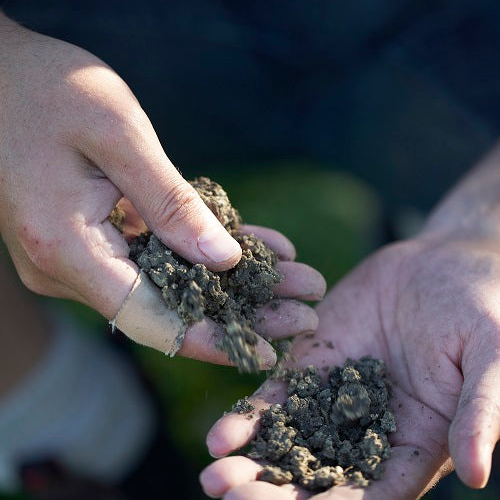
Sustainability
Caring for the land is at the heart of what we do. See how we work with nature to protect our vineyards for generations to come.
Read more